
The African Regional Organization of the International Trade Union Confederation (ITUC-Africa)
wishes to salute and reaffirm our support to all social partners and civil society,
including schools, youth and women’s groups as well as the media in the campaign against
child labour.

Nevertheless, we know that the battle to eradicate child labour has not been won. The task,
however, is to continue to marshal practical and imaginative policies and programs to defeat
this menace.
We equally know that the incidences and use of child labour is most rampant and prominent
on our continent, Africa, largely because of endemic poverty. We must continue to reject the
excuses and arguments about poverty that rationalize the use and exploitation of children.
This is because child labour defeats the essence and outcomes of our fight to tackle poverty
and achieve prosperity for our peoples and nations. Child labour undermines the physical,
social, mental and psychological development of the child, thereby entrenching and deepening
the vicious cycle of generational poverty.
The challenge therefore is for all actors and partners, particularly governments, to sharpen and
deepen their interventions to take our children out of the farm plantations ; away from the
streets as beggars and hawkers ; out of the hidden corners of homes as domestic servants ;
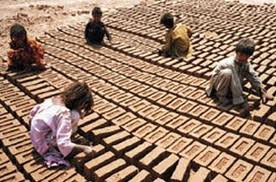
away from the dangerous and hazardous construction and brick making sites ; pull them out of
the mines and quarries, as well as all other places they may be found and put them into
schools.
Another critical issue that arises from child labour is labour trafficking. This phenomenon must
be consciously and aggressively tackled to stem the tide of abuses against children.
Education remains one of the sure and secure means to tackle child labour, protect and
promote the rights and wellbeing of our children as well as secure their future and that of the
nation. Therefore, we urge governments to engineer fiscal policy architectures that provide
education, health, shelter and nutrition for our children in a sustainable manner.
State monitoring and labour inspection should be stepped up as part of the measures to
ensure compliance with ; and the promotion of the provisions of ILO Conventions No. 182 on
the worst forms of child labour and No. 138 on the minimum age for employment. We urge
governments to demonstrate sufficient political will and decisiveness to effectively sanction
persons and businesses using and exploiting children.
We also urge working families and their organisations not to relent in their efforts as whistleblowers
against practices of child labour. We must continue to insist on adult employment
because we know it contributes more progressively to the welfare and wellbeing of
households, our communities and to the growth of our economies.
Once again, ITUC-Africa strongly affirms its support to African governments, our affiliates as
well as civil society organisations to win the fight towards the eradication of child labour.
Issued at Lomé, 12th June 2012
ITUC-Africa’s Statement on World Day against Child labour


